How reassuring to know you aren’t completely without a sense of rhythm.
Picture the most intense boss battle, final mission, last wave, whatever it was that last got you into a flow state with a video game. That feeling where you no longer have to think about your inputs. You’re plugged in. Someone made a whole game of that: Around a dozen hours of gameplay painstakingly crafted to put you in the zone.
At its core Hi-Fi RUSH takes the concept of a rhythm game and asks “How much is too much?”. While you can expect the usual concentric circles of timing and Guitar Hero-esque scrolling fret board, Hi-Fi RUSH puts the rhythm in every nook and cranny of the universe. Your characters steps and arm swings move in casual synchronisation with a nearby maintenance robot. The cogs of a mega-machine turn at one with the pistons of a nearby engine. Every set piece is carefully coordinated with one of the many original and licensed tracks at a variety of BPMs, setting the difficulty of the combat and the attack patterns of your enemies.
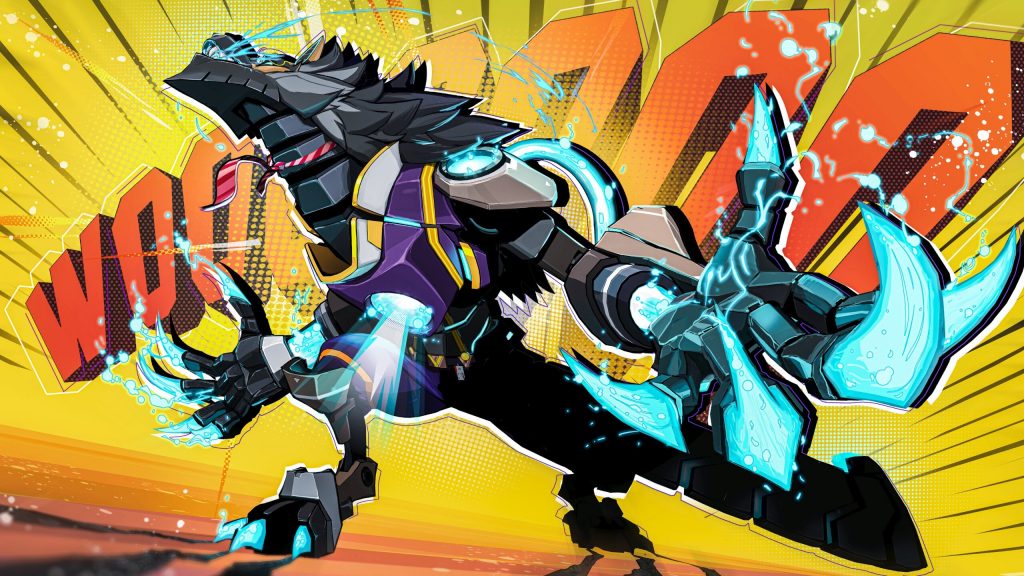
Beyond the inherent beauty of it all, it’s impressive how easily the rhythm comes to the combat. Don’t worry if you’re a little clumsy for the first 15 minutes, getting a feel for what the game is trying to guide you into can take a moment. But once it click, it clicks. Attacking, dodging, and parrying in time to the music makes for incredibly satisfying engagements. Enemy variety keeps you on your toes, with a good gradual drip feed that pits you against a gradually increasing arsenal of Vandelay Technologies robots. (Not to be confused with the latex manufacturing company from Seinfeld: Vandelay Industries).
Crucially, the game does not take itself too seriously. Littered with self-referential humour and occasional tongue-in-cheek jabs at the state of modern capitalism, it’s sure to catch you off guard at the most inappropriate of times for a good chuckle.
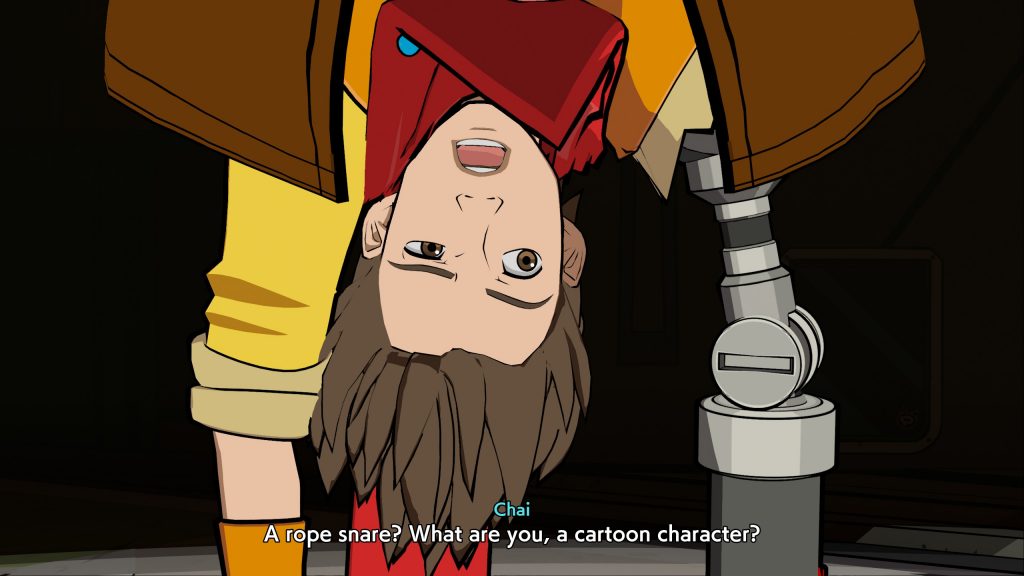
Tango Gameworks have been careful to balance the depth of the game with its potential audiences. You can get incredibly far on Normal difficulty without engaging too closely with exploration, complex combo moves, or the in-game upgrade store. For those willing to look behind every crate and barrel however, there is much to find. Rhythm games have the unique ability to unleash some absolutely unhinged rage at times, and this balance was a good decision to avoid that frustration. There are of course higher difficulty options for the masochists amongst us.
Hi-Fi RUSH’s strongest highlights expose some of its early game weakness however – the game leaning heavily on original scores rather than licensed music. While these tracks are outstanding in themselves, they are ultimately unfamiliar. During later levels, licensed music is used more frequently and in quick succession. In particular segments played out to Invaders Must Die by The Prodigy, and a remix of Beethoven’s 5th Symphony really highlight how much deeper a flow state can be achieved when you are already familiar with the beat you’re playing to. More of these moments sprinkled into the early game would’ve gone a long way to help new players understand the mechanics, rather than familiarising themselves with a unique track alongside a whole new style of hack and slash gameplay.
While the studio behind Hi-Fi RUSH was thrust into limbo by Microsoft cutbacks, it has thankfully been acquired along with the Hi-Fi RUSH intellectual property by Krafton, best known for publishing PUBG. Fingers crossed its not the last we see of wannabe rockstar protagonist Chai and his gang of “losers”.
Leave a Reply