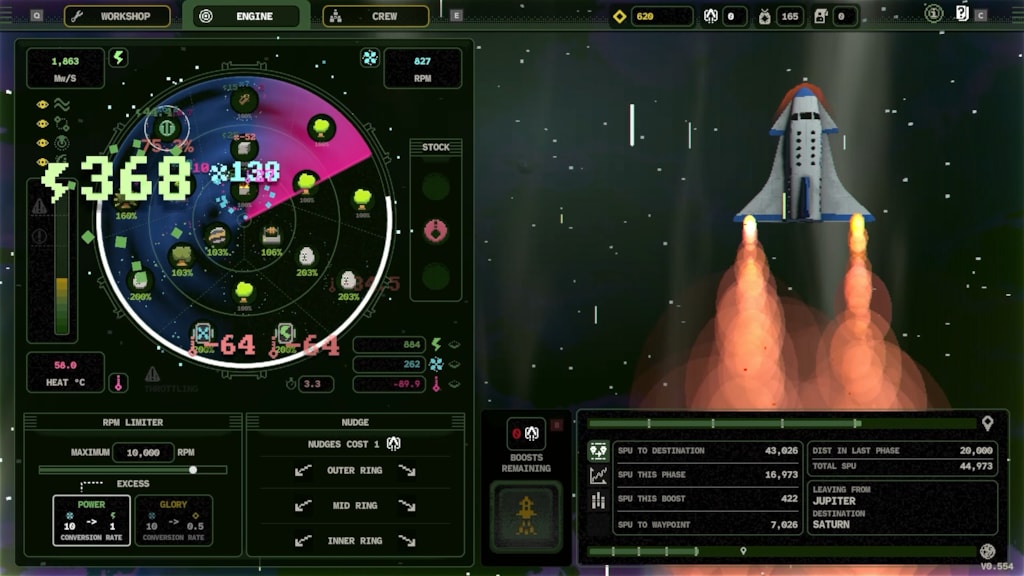
Yogscast Games and LittleBigEars Games announced a massive update and overhaul of their demo for the upcoming game: Glory On Pluto. Just in time for Steam Next Fest, they’re inviting players to check out some new mechanics, items, and balance calibrations as the game continues development. There’s no public release date at the moment, but I can say that after trying it out, it can’t be too long until we see the full game available for purchase.
Glory On Pluto does a pretty good job at tutorialising the game. I’m a big fan of games that let you customise the tutorial experience depending on what you care about, and this game lets you opt for a longer more in-depth tutorial, or a more brief summary of the mechanics. There’s a lore dump that comes optionally too, but I anticipate that’s just the beginning of a much bigger established in-game narrative. I sure hope so, because if we need a “this will require some reading” warning before some text that takes about a minute to read, then maybe games are heading into short form in the same way video has.
At its core, Glory On Pluto is a roguelite of the “pick one of three” variety. A genre that’s definitely getting a bit tired these days, but the game’s visual style and design framing around the mechanics does an admirable job at keeping things fresh. It features satisfying flashy animations to fuel the number-go-up dopamine that underpins this kind of game, succeeding in places that similar attempts to add variety to the formula, like Spin Hero, have failed.
The question with games like this has become not so much “is this worth playing?” and more “why is this worth playing over something like Balatro, Megabonk or Vampire Survivors?”
I can happily answer that question: Glory On Pluto uses three key numbers: power, RPM, and heat. Power dictates the raw energy coming from your engine in each of its cycles, dedicated to guiding you from the Wuldorian stronghold of southwest England, to Pluto on the outskirts of the solar system. RPM increases the speed of your engine, allowing for more cycles to take place in each fixed timeframe or “boost” that you manage a limited supply of for you journey. In that way, RPM is kind of like a multiplier in disguise, a refreshingly novel way of getting that information across.
Then heat, my favourite mechanic in the game, functions as a balancing act. There are plenty of high power, high RPM engine fuels you can choose that also add a lot of heat to the engine. Too much heat, and you’ll find the engine throttling itself, unable to complete the full boost duration, and preventing you from getting the necessary power to reach the next checkpoint.
Balancing the impact of each of these feels just the right amounts of thoughtful and easy to interpret. LittleBigEars Games have put a lot of effort into making the synergy between fuel types easy to interpret, an often overlooked step that demonstrates the polish the developers are hoping to put on this title.
This very cute 90’s and 2000s futurism aesthetic, combined with a compelling “just one more run” gameplay loop, has me excited to see a full release for Glory On Pluto. It reaps the benefits of hindsight bestowed upon it by years of subpar games in this space, but may show that we’re finally entering some kind of swan song.
Leave a Reply