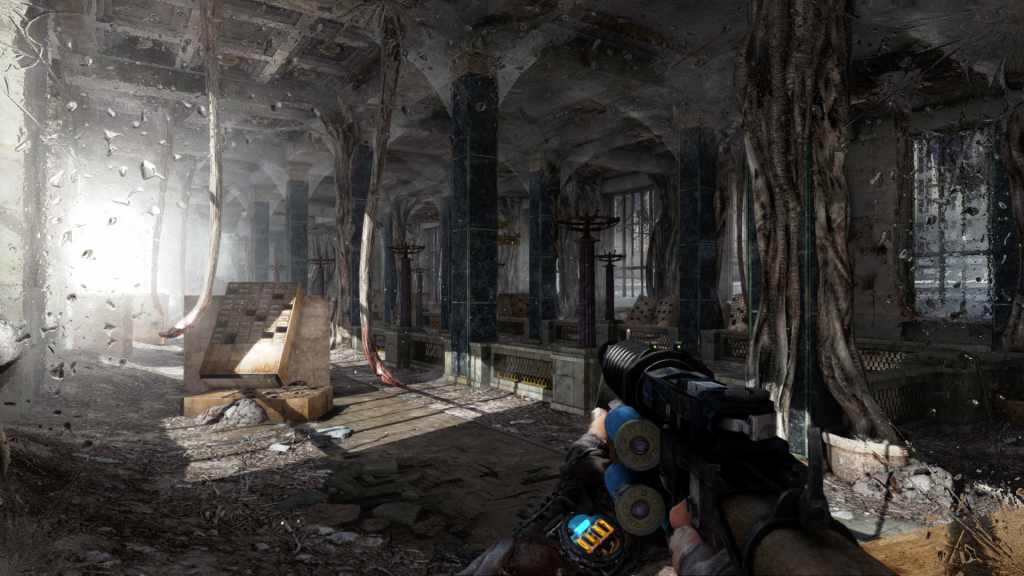
A product of its time, Metro 2033 (even in the Redux version) lacks much of the polish that you would expect playing a shooter today. It does, however, more than make up for this in character. Released in 2010, and subsequently remastered in 2014, it uses 4A Games’ proprietary engine – which has seen only one release not in the Metro universe. While the game is based on the 2002 book of the same name by Dmitry Glukhovsky, it shares only its universe and title character. Most of the actual story beats are either brand new or heavily adapted for the new medium. It’s good to see an adaptation understand that direct copy-pastes between the written and interactive formats usually leave much to be desired.
The game pitches itself at times as a survival horror, something which seems to be widely agreed upon by the fanbase too. Honestly, I think it’s a stretch. Unless you’re playing on hardcore, even a relative novice to the genre will have no difficulty keeping up with the survival elements of it. Primarily you are limited by the resources of ammunition, and filters. Ammunition’s necessity is rather self explanatory, but it split between premium military grade ammunition that can be used as currency, and general lower quality ammunition used in your weapons. You can use the military ammunition in your guns too in a pinch for a boost in damage, but this will make purchasing weapon modifications/upgrades more difficult at the occasional trader encounters. Filters are required for your gas mask, each extending the duration of time in which your character, Artyom, can explore hazardous environments. Neither are particularly rare once you understand where to look, and the game does a good job tutorialising this early on.
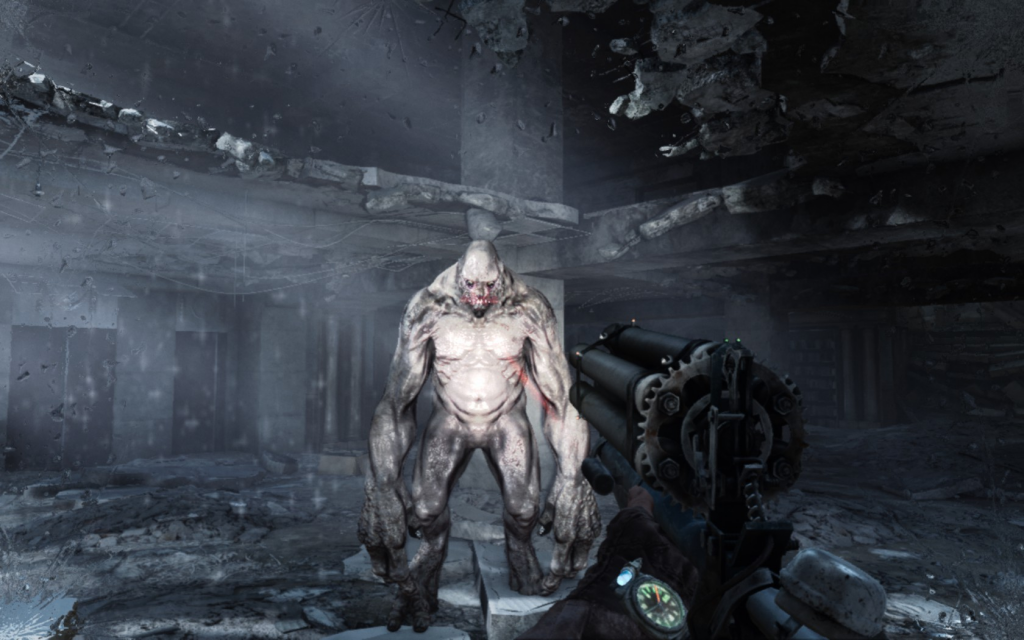
The horror element will always be more subjective. There are plenty of disturbing and creepy atmospheres to explore. However, the 2010 AI is quite predictable and lacks any really novel behaviour. For the most part enemies behave very similarly regardless of the visual design put into them, with one notable exception: Librarians. The Library mission in Metro 2033 is somewhat infamous and for good reason. Unfortunately, it is as much hated as revered, providing a common barrier to people’s desire to replay the game. Pitching you against hulking behemoths resembling the gorilla, the game introduces a new mechanic a la Weeping Angels. Stare down these enemies and they pose no threat, theoretically.
Once you have gotten through your first few (undoubtedly doomed) attempts of this level, it becomes clear what flags the AI is looking for, and interacting with each creature becomes tedious rather than scary or even interesting. This would be an interesting mechanic to use sparingly throughout the game, never quite letting the player get the hang of it, but also making segments short enough that the adrenaline drop of panic is likely enough to help you survive. Instead this is used for one chapter only and boy does it drag. You will encounter these librarians one after the other as you traverse the building looking for the objective, and the game seems to be fully aware of the tedium, because upon finding the objective it cutscenes your escape rather than expecting you to navigate out again.
Metro seems to have a real habit for this unfortunately, and it’s for this reason the game slips far more readily into the action genre. You would hardly call Doom a horror game, but if it weren’t for the frenetic combat that makes it a boomer shooter, what would we have left to call it? A shooter presumably, and the glove fits Metro here. Most of the tense but ultimately harmless traversing between the major story beats is written out into a 5 second cutscene, or in a few cases, just a fade to black and subsequent appearance at the distance destination. From what I’ve heard, this is massively improved in the future games in the franchise, allowing the player to feel more immersed in the world of the Moscow Metro. I feel duty bound to find out.
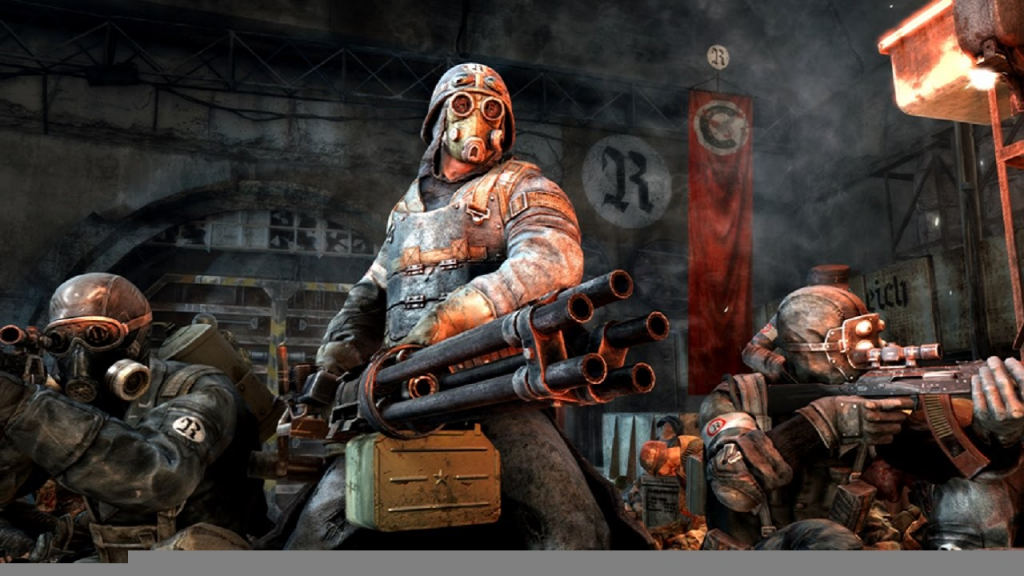
The narrative of this game while not particularly immersive, is well written and interesting. There are likeable and interesting characters with motivations that make sense, your antagonists are not cut and dry “baddies”, and hidden beneath what feels like a linear story is actually more of a branching karmic system. The game does an excellent job hiding these elements from the player just the right amount. From very early in the experience it is clear that there are elements which are optional to engage with, and the occasional strict fork in the road choice. It isn’t clear early on that these will amount to a change in the narrative, but by the time your story is coming to a conclusion you will feel the weight of your decisions on your conscience without a doubt.
Leave a Reply