Very rarely are the initial notes I make for the first 2-3 hours of a game so vastly different to my final impression. After a few decades playing a wide variety of games, you get a pretty good feel for when it’s hitting the spot, or if there’s a swing and a miss. Death Stranding however, bested my instincts. Above this very paragraph I can see notes which I can almost chuckle at now with hindsight, but I’m glad I made them so as not to lose sight of this game’s imperfections.
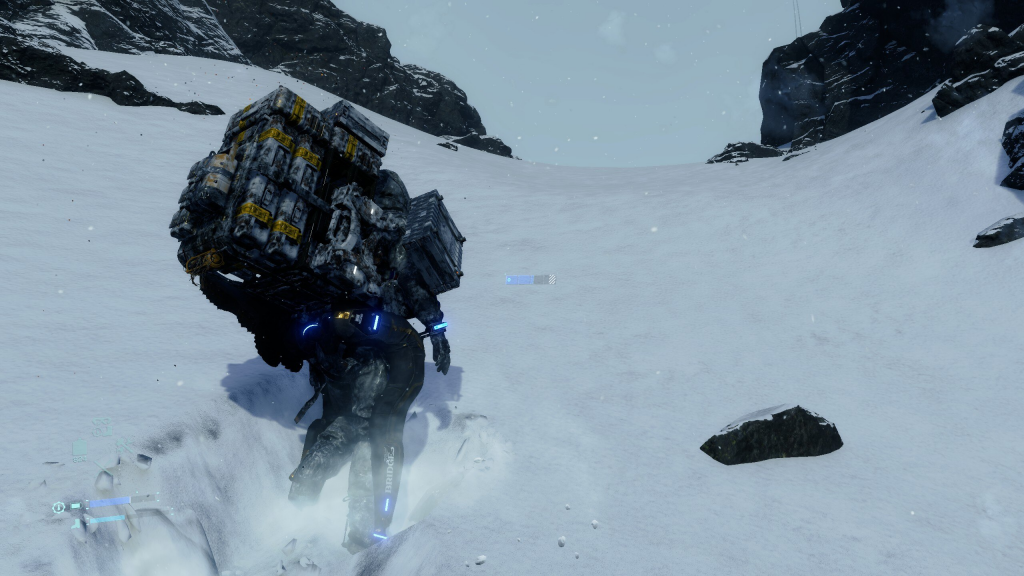
First things first, play this game on a controller. Bless my friends for quickly making me aware of this one, as it is responsible for a considerable amount of frustration in the initial hours of playtime. Graduated speeds of movement and the vibration force feedback are both incredibly crucial to even basic interactions and locomotion in Death Stranding, it really needs a giant popup to warn you as such – similar to that of Hollow Knight: Silksong. The game doesn’t help itself when it comes to feeling familiar with your control set. Early on, Hideo Kojima is determined to ensure you understand a great deal of context about the world you are about to navigate well before you get any extensive experience navigating it yourself. You will be expected to endure what is essentially a feature-length film’s worth of cutscenes at the beginning – so strap in for a long session one.
As for the actual controls (once you have your controller plugged in…), you are expected to learn a lot from feel an experience. This is not necessarily a bad thing, but the tooltips designed to explain things mid-game are almost teasingly quick to disappear. They are mercifully very easy to navigate to in the game’s menu, but going for a small reading break after your feature length film is concluded will definitely turn some off from getting their teeth sunk into this title.
Much of my early trepidation came from something that it turns out you really have to get used to throughout Death Stranding: A mechanic, concept, or storytelling device will come up once and never really come up again. What may at this stage seem like a tutorialisation of a vital mechanic will turn out to be a throwaway experiment. The best example I can think of this is in one of the earliest cutscenes, in which you are given control of the camera. This very much felt like being the director of a movie that you’ve never heard of, so the entire freedom of looking wherever you like felt like pressure to actually identify where in this vast world I’m supposed to point the virtual lens. This though, basically never happens again until the end of the game, at which point you have a much better idea of what you’re meant to be looking at.
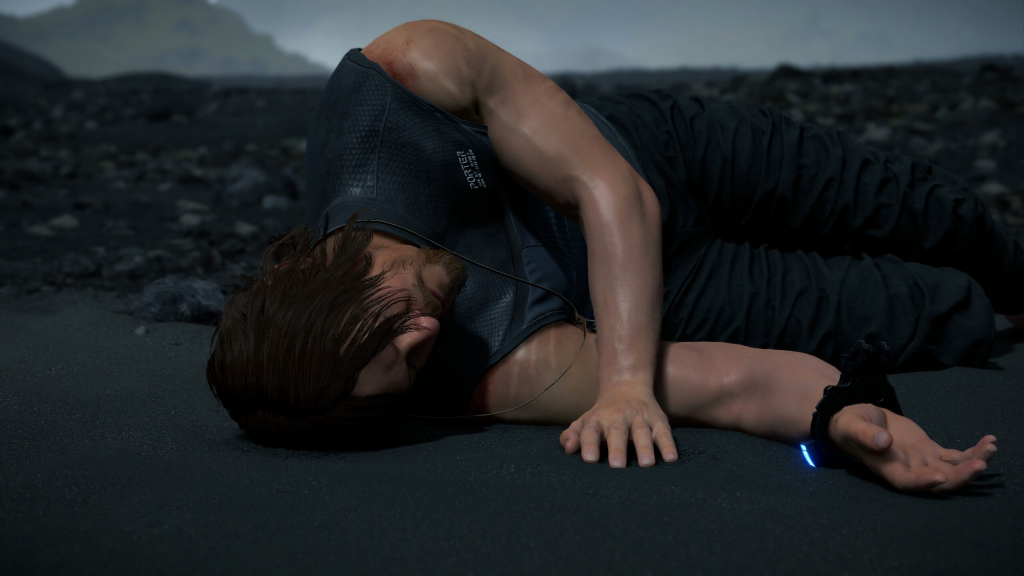
The visuals and the storytelling actually occurring through them are of course stunning. Being my first Hideo Kojima game, I hadn’t really appreciated how poignant it was to use the language of film in the “DIRECTOR’S CUT” part of the games title. The game is in many ways structured much like cinema. The writing suffers a little from the sheer amount of exposition wedged into the early game, but having since seen the amount of optional readable content in emails and interviews available in your virtual terminal, it’s clear that the writers had a lot they wanted to get into the players brain. If you choose to engage with this content, you can experience a level of world building and immersion rarely achieved in the video game medium.
Eventually you are released from being strapped to the chair while someone reads to you, and allowed to venture out into the world through what is ultimately the core gameplay loop of Death Stranding: Take X from A to B. You are a porter, a courier, dystopian DoorDash, however you prefer to see it. Your task is to trek from the east coast of North America, to the west coast – connecting facilities as you go and encountering many smaller storylines along your journey. This opens up another of Death Stranding’s challenges: Scale.
Putting an entire continent to scale would of course be near impossible. Or rather, near impossible to make enjoyable. The map representing the entire middle third of America is about 2 miles long and 2 miles wide, for example. It is of course full of treacherous terrain and many obstacles which successfully make it feel considerably larger than that, but it is a challenge to envision it as the grand journey initially explained to you.
This issue however, like many in Death Stranding, can be quite self-selecting. At some point (god knows why) I decided to be a bit more of a completionist than my typical approach to games allows. I decided I would get every facility along my journey to it’s maximum connection level. This requires a lot of surplus hauling of goods not at all relevant to the story, but forces you to engage much more complexly with the environment between facilities that you otherwise may only need to traverse once or twice. This approach really helped with the sense of scale, but I’m not sure I could recommend it. Somewhere about 75% of the way it really started to feel like a chore fuelled by sunk cost fallacy, rather than some deep appreciation for a game. On the other hand I struggle to imagine how the game would play if you just did one storyline mission after another. The pacing is very clearly designed for you to self-insert plenty of padding between events, but those who find no inclination to do this may feel the story is rather frenetic and lack the sense of achievement brought on my the 90+ hours spent delivering superfluously.
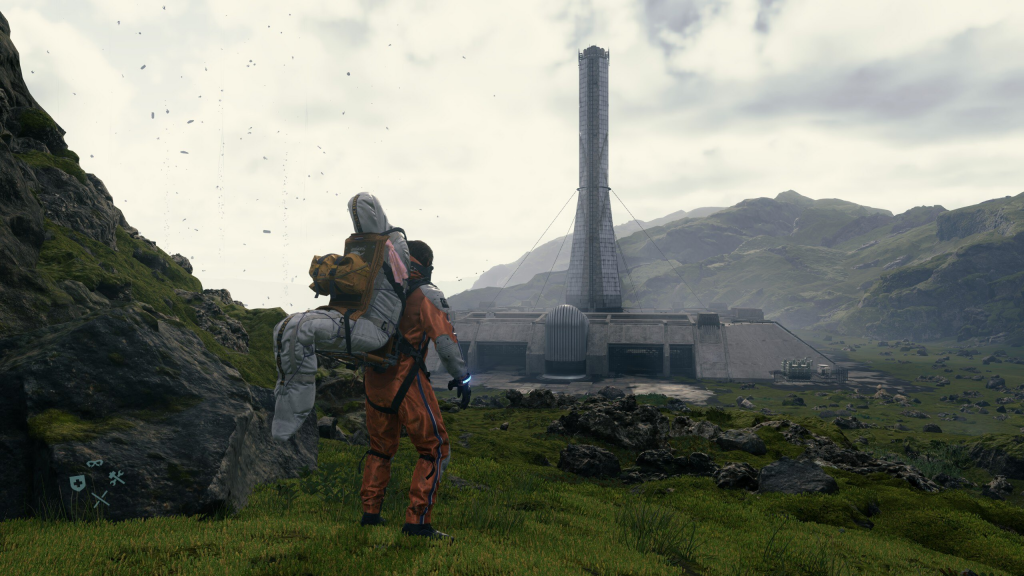
As you approach the ending of the game, the density of cutscenes once again increases tremendously. In this way, Death Stranding clearly struggles to decide on what it wants to be. Instead playing to a wide audience and suffering greatly for it. If it wanted to be a game that appeals to the meditative experience of repetitive progression, then spacing these cutscenes out more generously would have done wonders to the pacing. If it wanted instead to appeal to a more action adventure genre of player, primarily pursuing the main storyline content, then including that story more diegetically as part of the deliveries, rather than a cutscene at the end of them, would’ve made much more sense.
Despite all this criticism, my nit-picking comes from a place of love. Death Stranding was a mind-blowing experience all-in-all. Frequently it tested my patience to the extreme, made me walk a mile (or two) in a porter’s shoes, and truly allowed me to connect with its excellent ensemble cast. It takes the time to poke fun at itself occasionally too, with great lightweight breaks from the otherwise deep and existential key story beats. If you’re the kind of person for whom The Silmarillion appeals, then this game will be for you. Deep down hiding under dozens of hours of toil hides some of the best narrative content I’ve come across. But Kojima is going to make you work for every second of it.
Leave a Reply