Tag: Warhammer

  • Warhammer 40,000: Dawn of War – Definitive Edition

    Cleanse. Purge. Kill.

    In a move that we’re now aware was to drum up interest for the upcoming Warhammer 40,000: Dawn of War IV, the Warhammer universe saw the welcome return of a classic on August 14th. Advertised as the “Definitive Edition” of the origin Dawn of War real-time strategy game, Relic Entertainment were soon swept up in the remastering trend that exploded this year, courtesy of Bethesda’s surprise Oblivion Remastered release in April.

    It’s true at least, that some remastering work was put into Dawn of War – Definitive edition, but those expecting it to be brought up to par with modern titles will be sorely disappointed. Upgrades have been made to the gameplay camera for modern display resolution compatibility, higher resolution textures, more readable UI elements, and higher draw distances. More in the nuts and bolts of the game, 64-bit platform support and an integrated mod manager have been added to reinvigorate the games modding scene. Unfortunately it appears they overlooked the holy grail of modern modding integration, Steam workshop support.

    As with most beloved classics, it’s not exactly like the original Dawn of War community wasn’t already faithfully putting their nose to the grindstone and producing mods even prior to Definitive Edition’s announcement. This gap between the expectation of an extremely loyal fanbase, and the games advertised improvements, has been reflected strongly in its reception so far. Unfortunately I can’t help but think this was not Relic Entertainment’s error at all, as they have at no point tried to portray the Definitive Edition as a huge jump.

    As well as doing their best to manage expectations, the game is currently at a 30% discount for anyone who already has the original Warhammer 40,000: Dawn of War – Anniversary Edition in their Steam library. Perhaps not steep enough a discount, but considering other studios pattern of releasing and re-releasing ultimate, special, or anniversary editions at full price regardless, this is a refreshing move.

    What I think the most avid fans of the game are overlooking however, are the players like myself. Dawn of War released in 2004. Practically before the Earth cooled, and certainly before common digital distribution of video games. The vast majority of people looking back at the fun times they had purging the heretics, probably did so from a CD-ROM.

    For this audience, the Definitive Edition is a perfect excuse to pick it back up and relive the experience without spending your first 30 minutes in the config file, or downloading mods you’ve never heard of just to bring the experience to “acceptable” for 2025. With 40+ hours of campaign content easily, when you account for the expansion packs included with your purchase, there’s certainly no concern that the game lacks the depth to be worth revisiting.

    If phrases like “Glory for the first men to die!” and “My face is my shield!” remind you of long nights dedicated to the conquest of Kronus, you will find the same pleasure very much still awaiting you in this edition of the game.

    Do you hear the voices too?
    Leave a Reply

    Your email address will not be published. Required fields are marked *

  • Warhammer 40,000: Boltgun

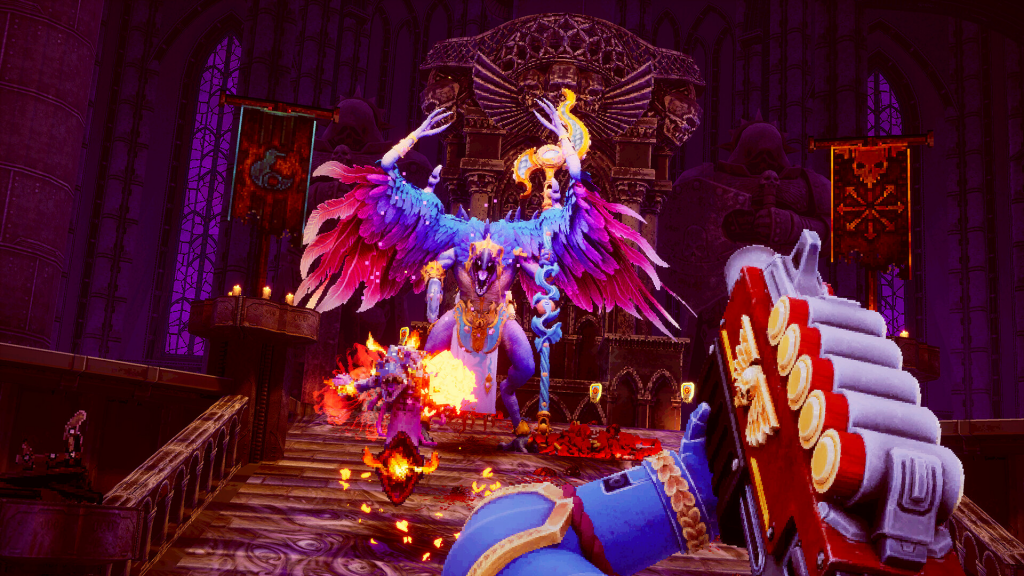
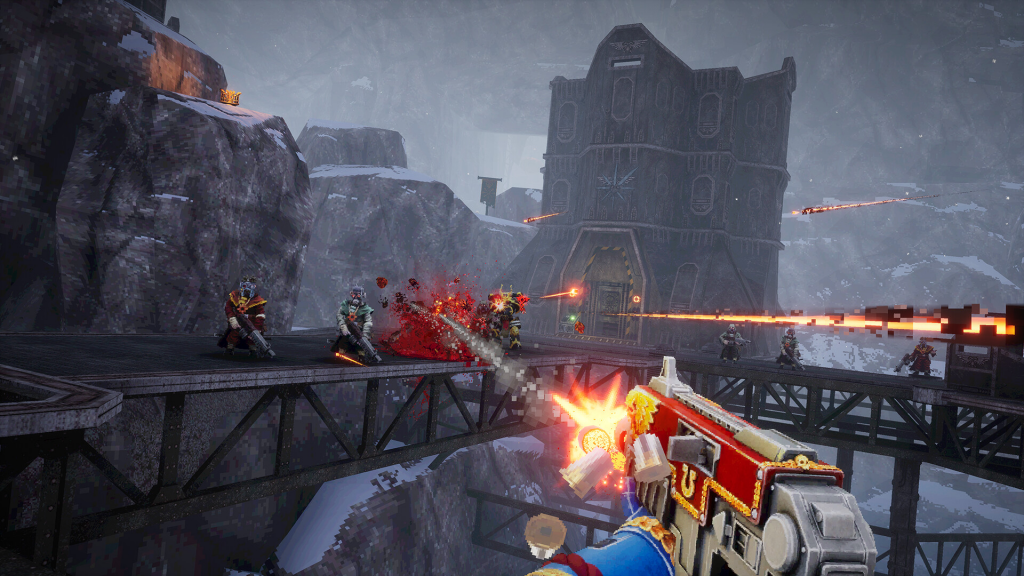
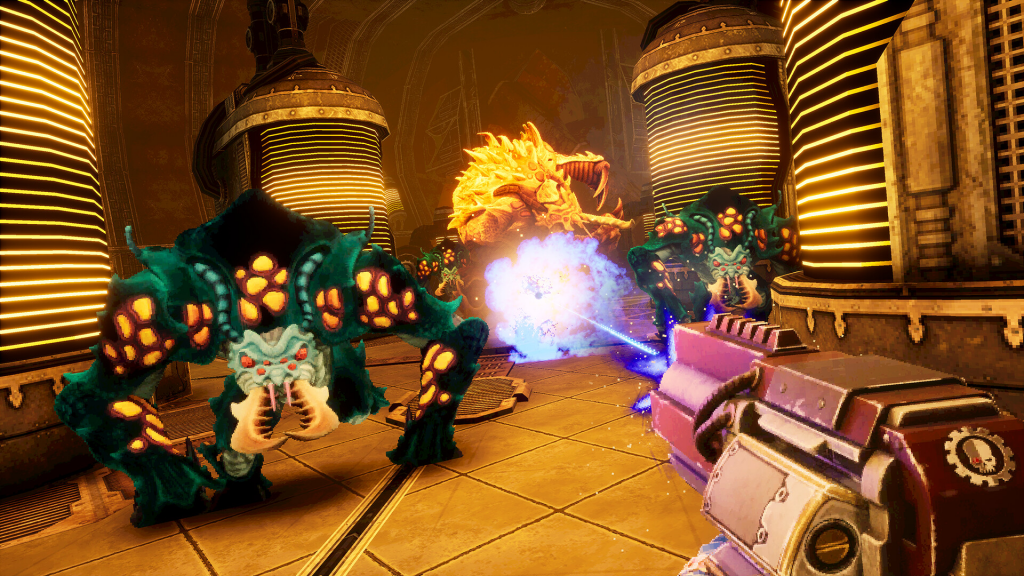
    Being just about the wrong generation to have really enjoyed the height of the boomer shooter genre, I have the privilege of enjoying many of these titles without the rose-coloured glasses of another era. Boltgun immediately stood out to me both on its aesthetics and unapologetic freneticism, a combination that meet perfectly when intertwined with the Warhammer 40,000 universe.

    As well as harkening back to a historic genre of video games, it cannot be undersold how much Boltgun resides in a past era of Warhammer too. That, I cannot claim to see without the bias of past experience, as someone who got heavily into Warhammer in the late 2000s and early 2010s. While modern 40k sits on mountains of lore set in stone by the Black Library, the setting used to maintain some level of mystique. Lore was hinted at, subtly nodded towards across all sorts of mediums, requiring some true deep knowledge and theory crafting to arrive at a narrative that made sense. Similarly, Warhammer has had to move on in terms of its “main characters” in order to keep the setting fresh for its audience.

    In both those respects, Boltgun goes beyond just the 2.5D graphics to emulate days gone by. You play the game as Malum Caedo of the Ultramarines chapter. It takes very little exposure to the work of Warhammer to have heard of the Ultramarines, and that’s part of their problem typically. For many years it felt like the Ultramarines were the true main characters of the universe, with other chapters of Space Marines seen as a edgier hipster pick for the kind of player who provides a mandatory lore dump before laying out their army on the 6′ x 4′.

    Warhammer 40,000: Boltgun

    Now, from what I can gather with my significantly lower exposure to the setting of Warhammer, the pendulum has swung and the Ultramarines are being nudged towards the side lines to make room for fresh stories to be told, and of course new models to be sold. For anyone who played 10-15 years ago however, the Ultramarines will probably occupy a special place in your heart no matter the direction of the lore’s grander narrative. Your first memory of them is likely to be your starter set, probably shoddily put together to fight the green skins over Black Reach.

    The game remains rather lore-agnostic, thank god. The line the Black Library treads between deep meaningful fantasy storytelling, and a modern day G.I. Joe to help sell more toys, is a fine one. I can picture myself getting very absorbed into it in the right circumstances, but spend 15 minutes around someone who has met that fate, and you’ll be scared off for life. I do not greatly enjoy needing an encyclopaedic knowledge of a universe to appreciate its setting, and thankfully Boltgun sets no such expectations.

    Warhammer 40,000: Boltgun

    Standing on its own two feet as a game, Boltgun is not without issue. It reeks of a planning process in which the main progression beats were laid out, then filler was equally distributed after the pacing of the game had been set. A big proportion of the Steam Review mention the game feeling repetitive and boring, quite an achievement for a game you can finish in less than 10 hours. But they have a point.

    In trying to keep each “act” of the game fairly equal in length, the player is stuck for their first few play sessions in monotonous environments, limited weapon options, and very very few variants of enemy. It’s not until the second act that you are brought into the outside world of a desert landscape, immediately injecting fresh energy into the game, but unfortunately too late for many players. It’s hard not to contrast this with Doom (2016) which will happily bounce you between different environments in 20-30 minute chunks, with a very similar total game length.

    Chapter III of Boltgun really brings out some of their best work. The culmination of all the mechanics, weapons, enemies, and environments. There’s even some refreshingly new content near the end that I can’t help but feel would’ve served better teased in Chapter I, even if only momentarily, in order to give the player reassurance that there was something new ahead to look forward to.

    The AI in Boltgun is basically terrible. Not unlike many games however, if you play it in good faith and just naturally follow your instincts, reading the language that the game is writing, it’s fine. The moment you discover some of its flaws however, the illusion does kind of slip away. The levels are absolutely full of vantage points from which you can deal damage, but not receive damage from the distant enemies. This incentivises a very slow and methodical approach to conserve health and ammo, at times even meaning a 0 damage boss fight is possible. This is heresy for a boomer shooter, and Malum wouldn’t approve of it.

    If you’re satisfied following the yellowest of yellow paint, rocking out to an excellent soundtrack accompanied by the rhythmic thud of your bolter, you’ve come to the right place. For innovative level design, lore, or challenging mechanics, there is little to be found.